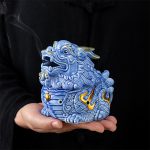
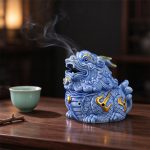
Hand-Finished Pixiu Coil Incense Burner
$49.99
Navy Celadon with Gold Tracery, Guardian of Wealth,Length-5.2in,Width-3.93in
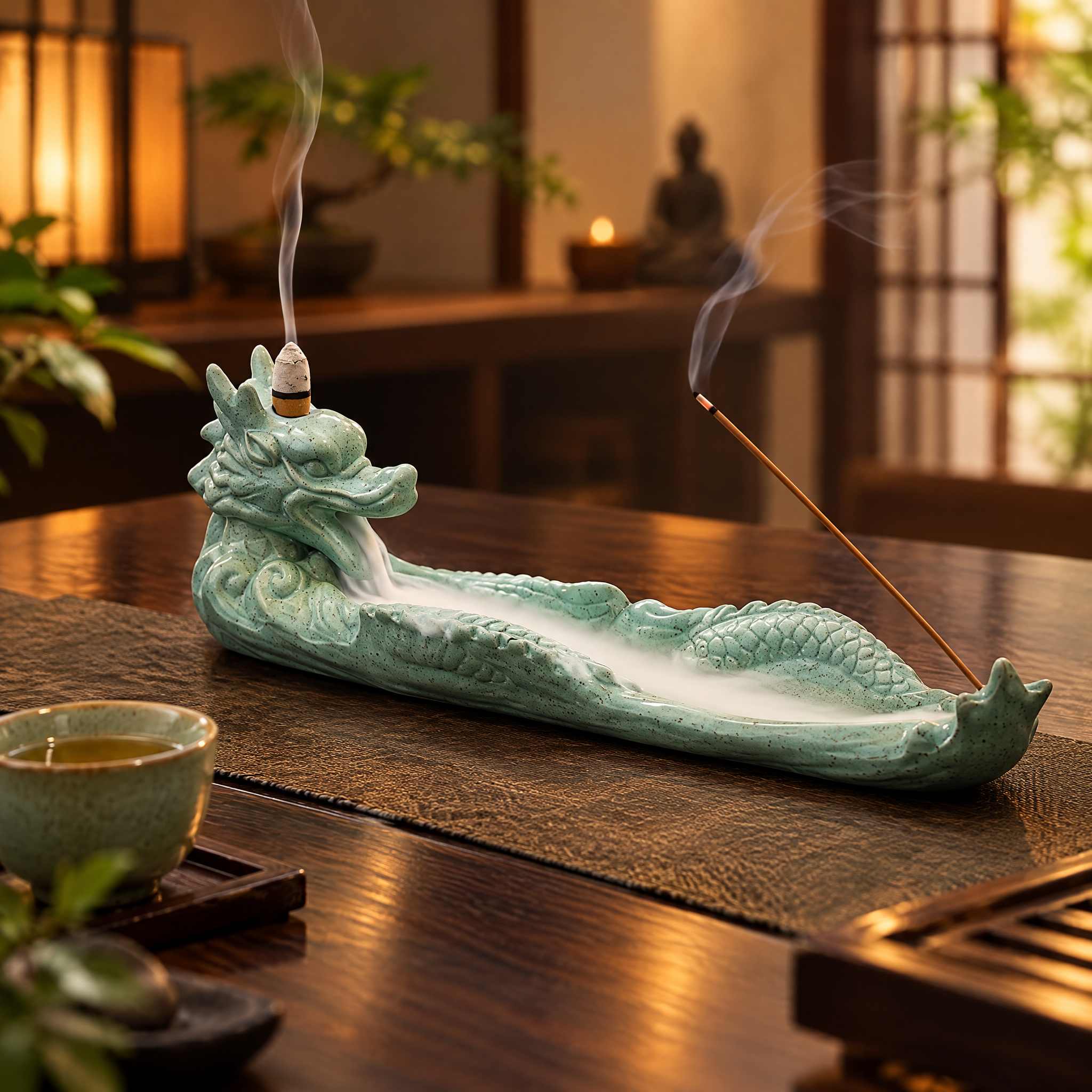
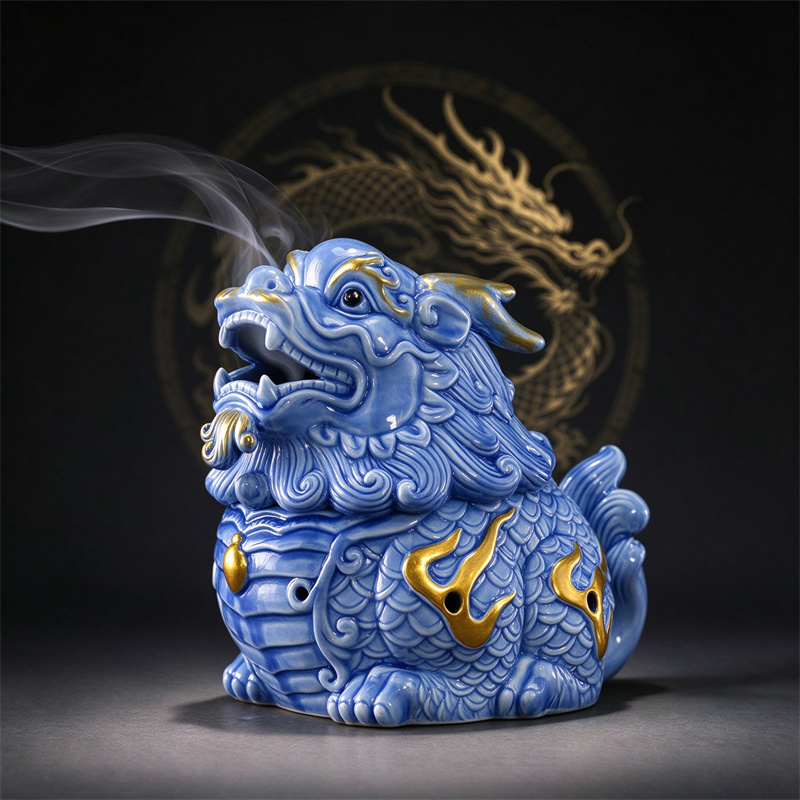
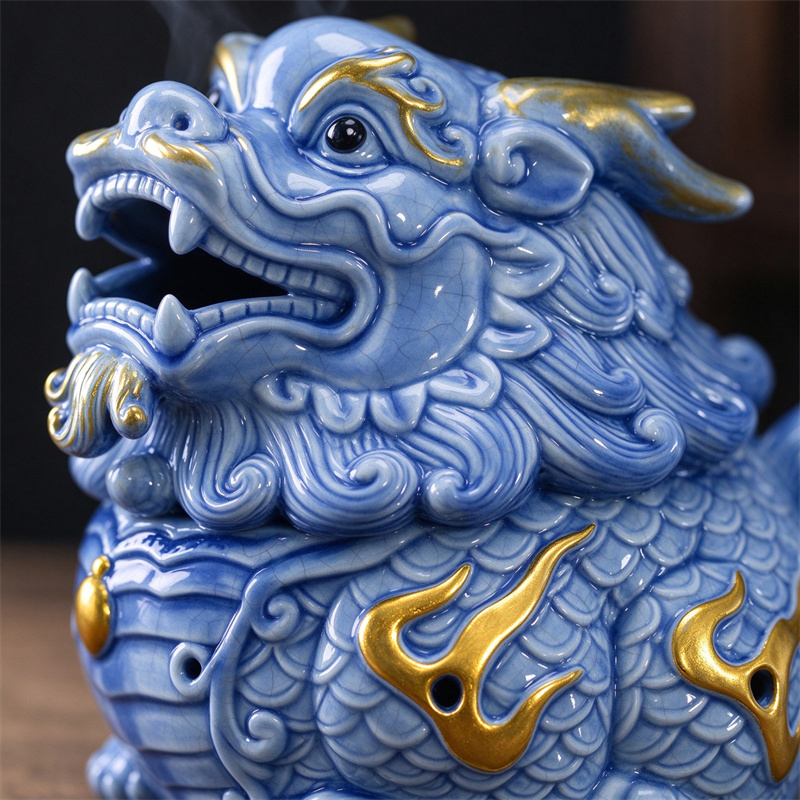
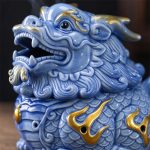
A guardian beast sits in your palm. This pixiu incense burner is shaped by hand in Dehua, Fujian — the porcelain town that has supplied the world with white ware for a thousand years. The body is cast, then trimmed and carved by hand: every curl of the mane, every scale along the flank, every ridge of the brow is cut and smoothed by a craftsman’s blade. The gold tracery is then applied line by line and fired, so the gilding sits under the glaze rather than on top of it — it will not rub away.
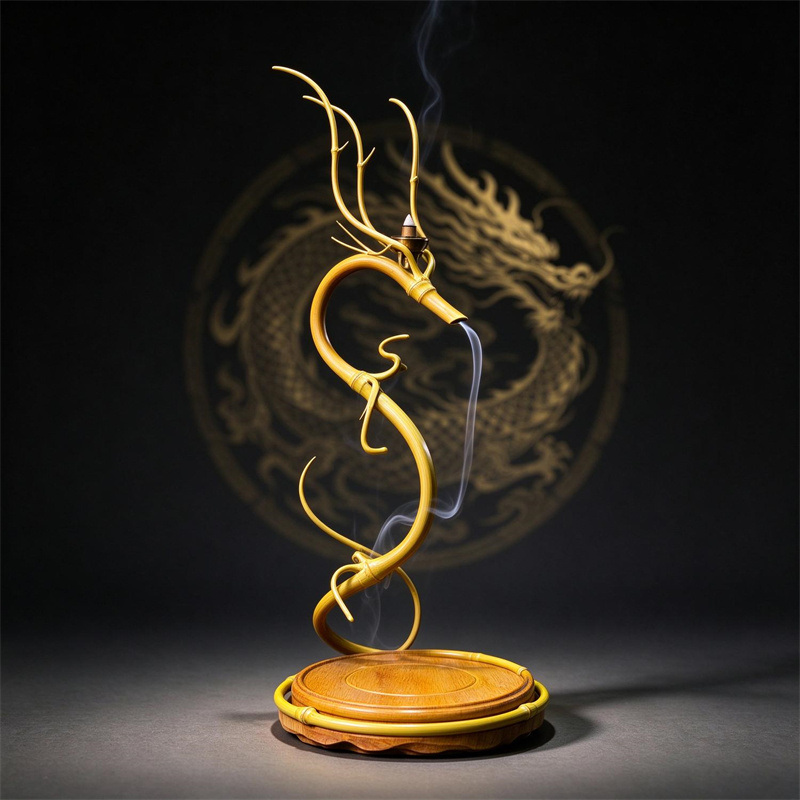
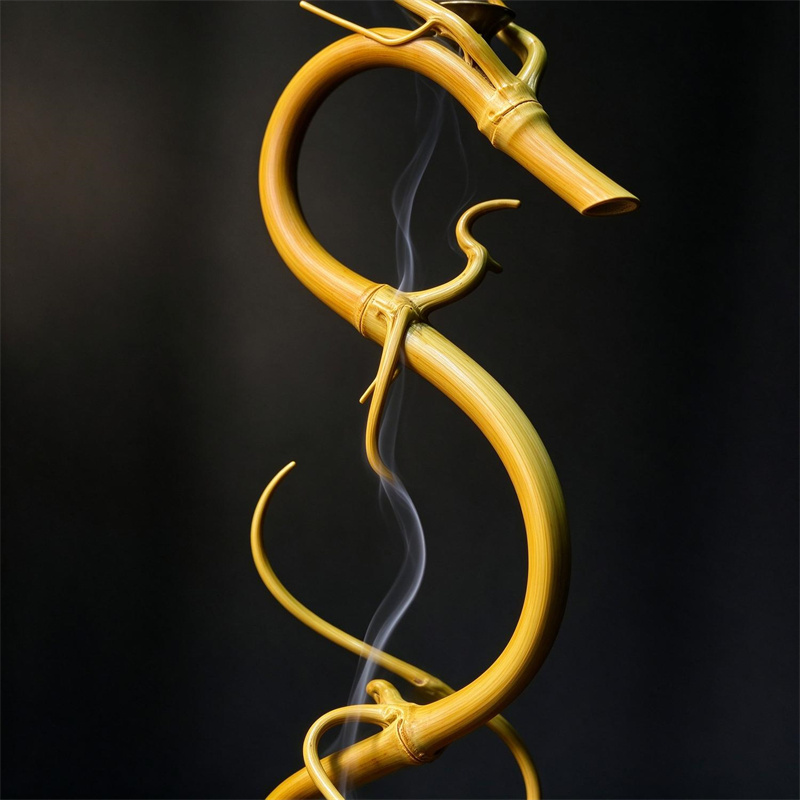
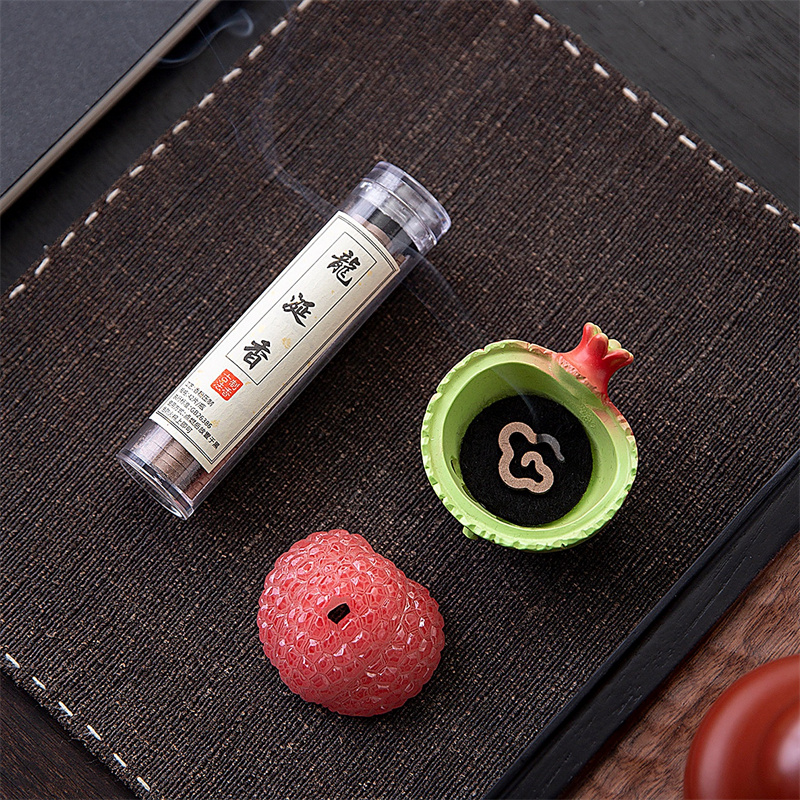
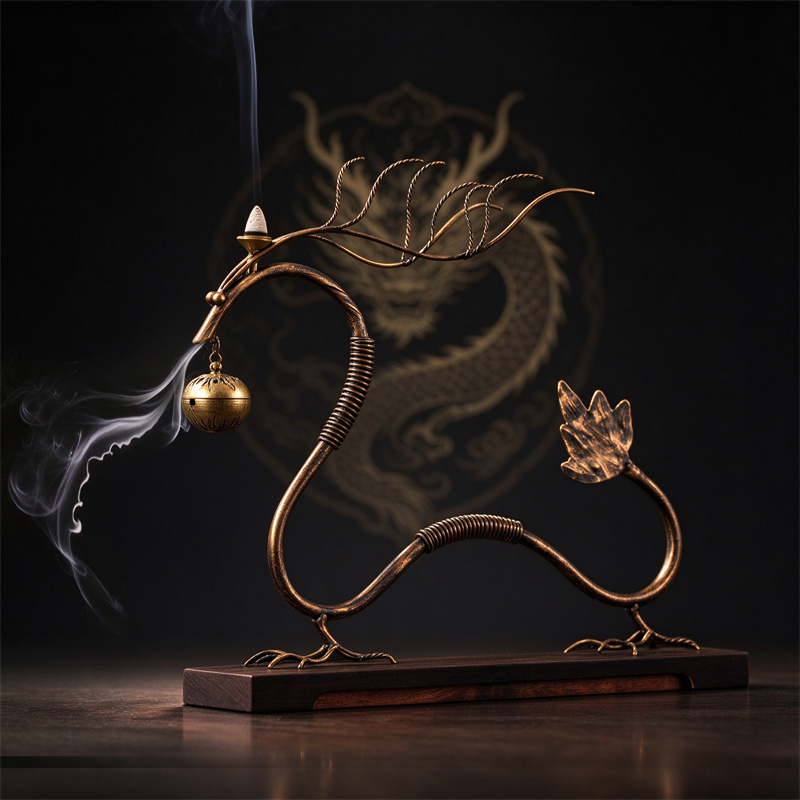
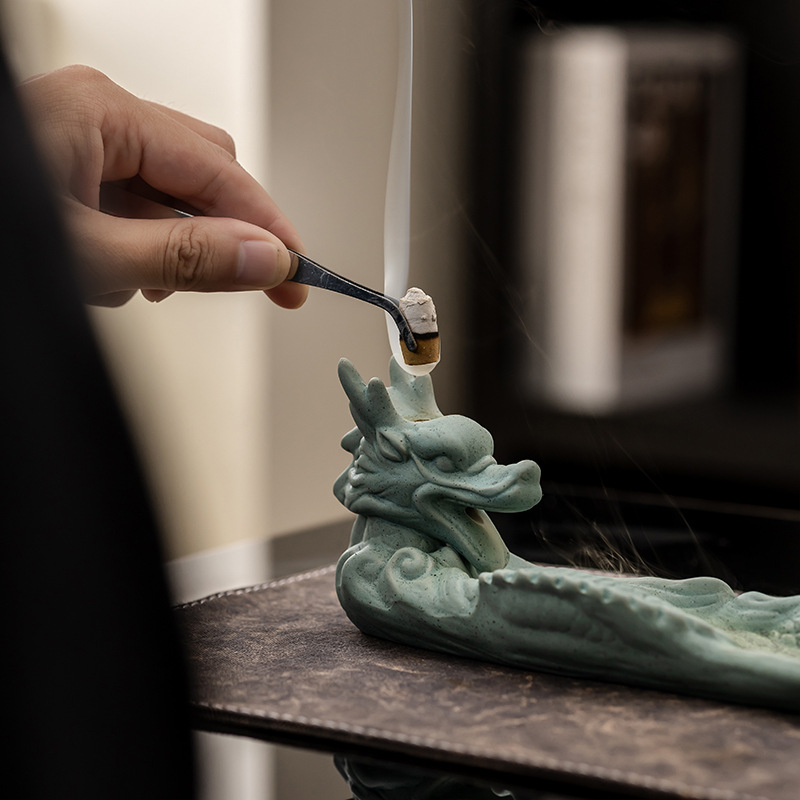
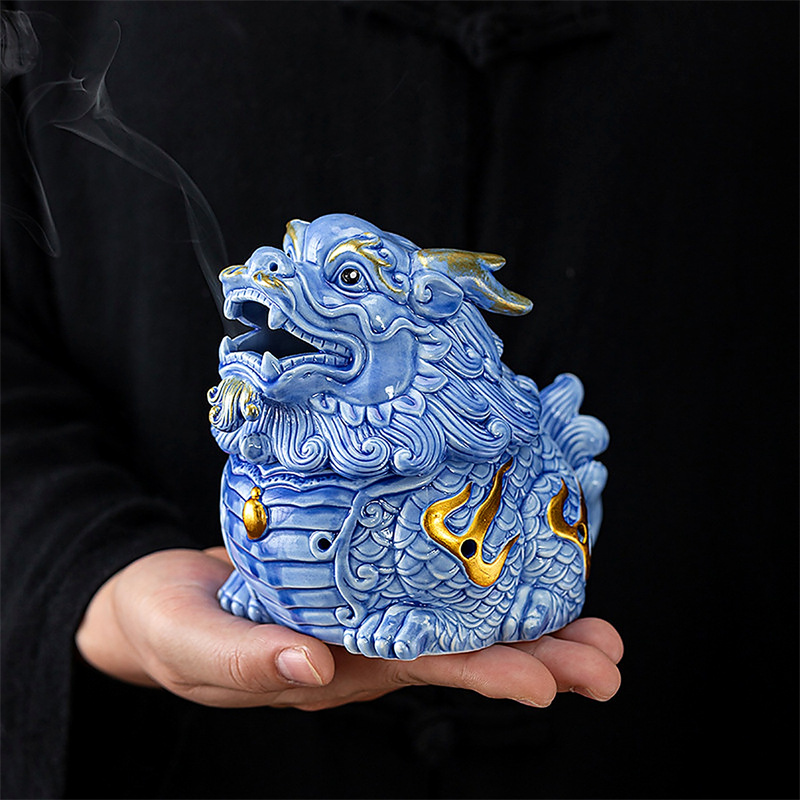
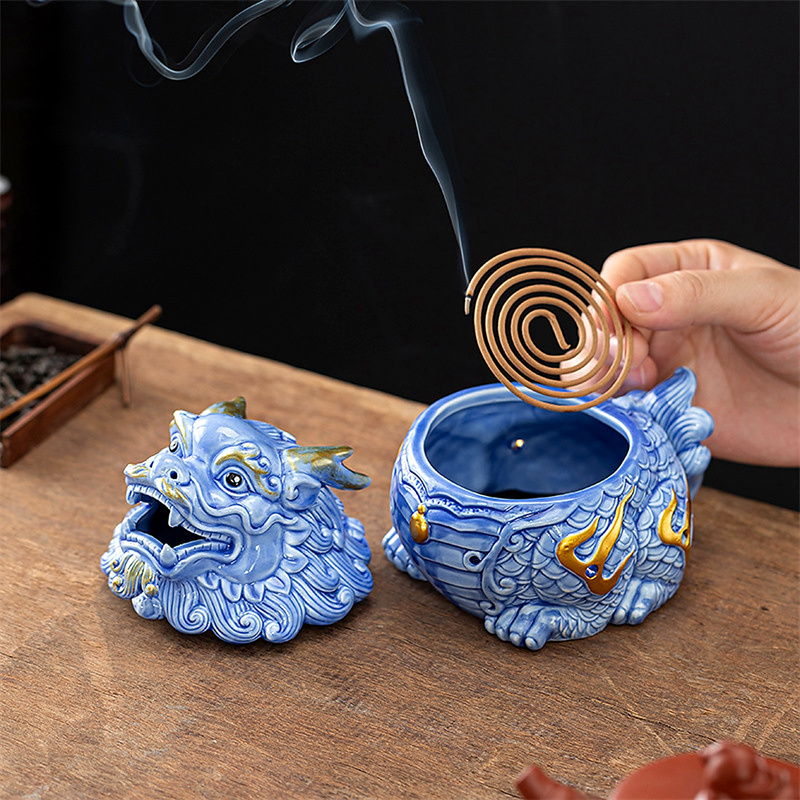
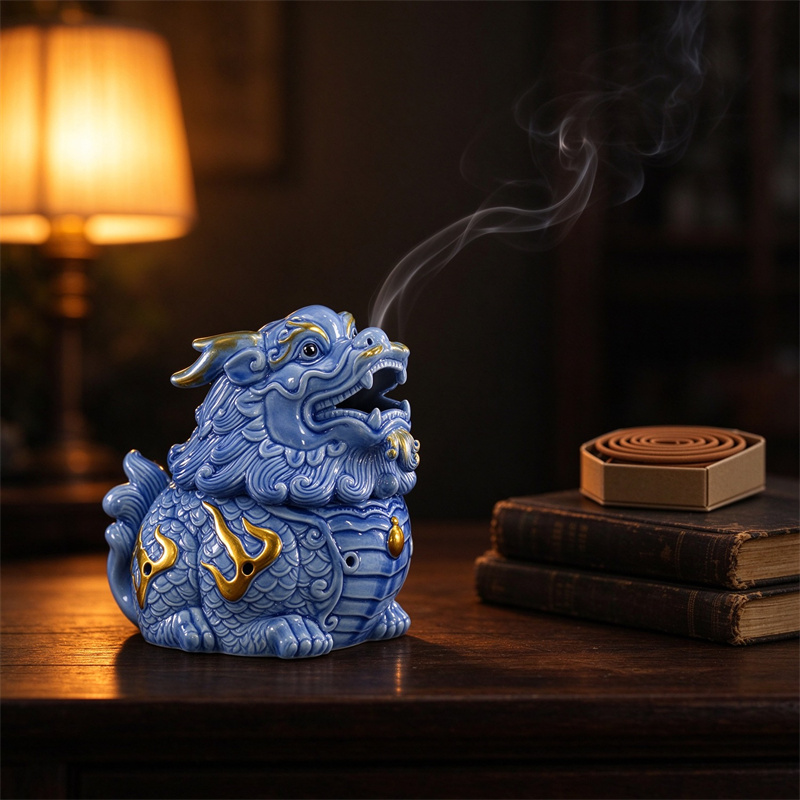
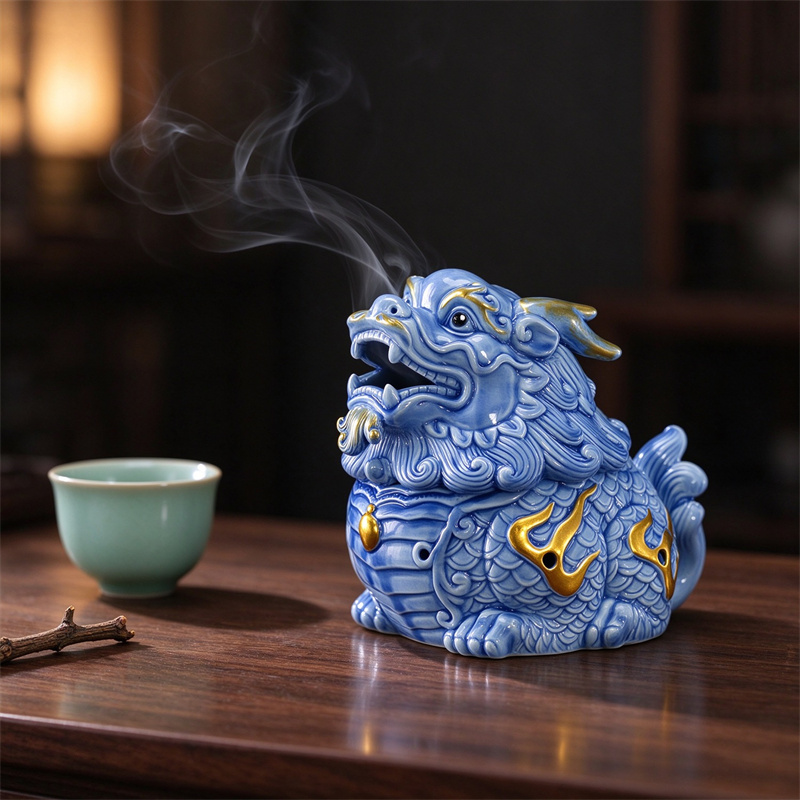
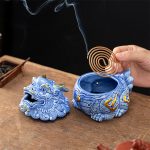
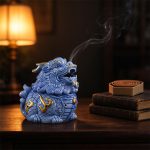
The pixiu’s body is hollow. Place a coil incense inside, and the smoke rises up through the throat to drift from its open mouth — a beast breathing mist. The deep navy glaze is a traditional “藏蓝” tone, near-black in shadow, blue where light falls, with an antique crackle that makes each piece slightly different.
- Material: Glazed ceramic (celadon), gold tracery
- Craft: Hand-trimmed, hand-carved, hand-gilded in Dehua
- Use: Coil incense (盘香) and cone incense
- Size: Length-5.2in,Width-3.93in,Approx. palm-sized, 480g — substantial in the hand
- Finish: Navy / antique / deep teal / crimson variants
- Packaging: Protective box
Note:This product is made of Ceramics: if it is damaged during shipping, please contact us immediately! This product is made of natural jade. Avoid direct contact with perfume and chemicals, and please remove it before showering.If you have any questions after receiving the product, please feel free to contact us at any time; we’d be happy to assist you.
The pixiu is one of the oldest beasts in Chinese folklore. In the old texts it is described as a fierce creature of the wild, so strong that the Yellow Emperor was said to have kept it beside him in battle as a war-beast. Later tradition gave it a stranger shape: a dragon's head, a lion's body, wings at the shoulders — and, in the most famous telling, a mouth but no exit below. It devours gold and silver, and having no way to release them, it can only ever take in. From this came its meaning: wealth that enters and never leaves. It became the guardian of treasuries, the companion of merchants, the beast carved above the doors of shops.
This burner follows that old shape. The craftsman in Dehua begins with the head — brow furrowed, jaw open, fangs set — because the face is what the beast is: watchful, unblinking, facing outward. Then the mane, cut in flowing strands so the smoke seems to move through it. The gold is the last step, and the slowest: a fine brush, one line at a time, tracing the ridges of the brow, the curve of the wing, the claws. If a line wavers, the piece is washed and begun again.
The body is left hollow for a reason. The beast is a container, and what it holds is smoke — the oldest offering in Chinese ritual, the thing that carries a prayer upward. Light a coil inside and the pixiu breathes. It is a small joke, and an old one: the beast that guards wealth, asked to hold nothing heavier than incense.
Where to place it
- Entryway, facing outward. The classic position: on a console near the front door, the pixiu's face turned toward the door or a window — tradition holds it should look out, gathering what comes in, never turned inward toward the room.
- The "wealth corner." The corner diagonally opposite your main entrance — the spot Chinese practice calls the bright wealth position. A low console or shelf, facing out.
- Desk or shop counter. Facing the door of the office or store. A common practice for those who work with money, clients, or negotiation.
- Tea table / meditation corner. Facing outward, with the burner set slightly lower than eye level.
- Avoid: facing a bed, a mirror, a toilet, or the kitchen stove; placing it above head height; putting it in a bathroom. Keep it off the floor.
When to light it
- Morning, before work. Opening the shop, starting the day, first email — one coil as the day's opening gesture.
- Before a meeting, negotiation, or a pitch. A few minutes of smoke to settle the room and the mind.
- First and fifteenth of the lunar month (初一、十五) — the traditional days of offering.
- New Year, and the fifth day of the first lunar month (迎财神), when Chinese households welcome the wealth god.
- Moving into a new home or opening a new shop — the first coil lit in the new space.
- Evening, when the work is done — a short coil to close the day.
When to use it
- Opening a business, moving house, starting a new job
- Negotiation, signing, client visits
- Study and deep-focus work
- Meditation and quiet sitting
- Welcoming guests into a considered space
What it is said to do for your energy
- Gathers rather than scatters. The pixiu's closed form is a symbol of consolidation — a reminder to hold what you have earned instead of leaking it.
- Clears the room. In Chinese practice, incense smoke is understood to lift stale, heavy air; a lit coil marks a space as tended.
- Settles the mind before a decision. Scent gives the breath a place to land. A few minutes of smoke before something important is the smallest possible preparation.
- Marks a threshold. Lighting a coil turns an ordinary morning into a beginning. Ritual of this size, repeated, is how a habit of attention is built.